India and Africa Both Want a UN Security Council Seat. They're Not Asking for Each Other's.
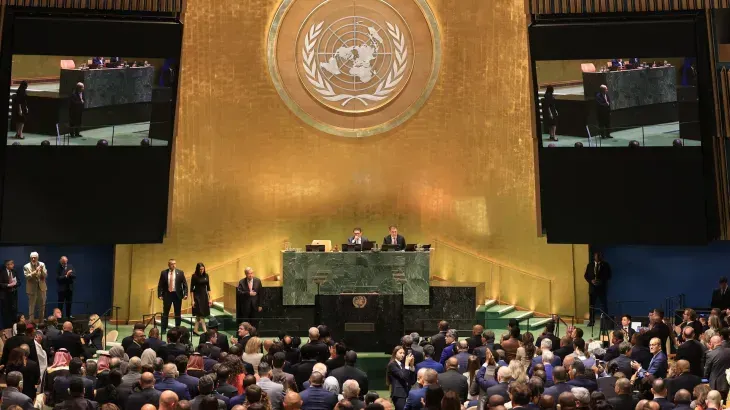
Every September, the UN General Assembly's high-level week produces a predictable ritual: heads of state and foreign ministers call for reform of a Security Council whose five permanent members and veto structure haven't changed since 1965. This year's edition — the 81st session, running September 22–28, 2026 — was no exception, except that India and a cluster of African nations spent the week making versions of the same argument, loudly enough to look like alignment. It isn't quite that.
Two different reform proposals, both real
India's push runs through the G4 — a grouping with Brazil, Germany and Japan lobbying since 2005 for six additional permanent seats spread across Africa, Asia-Pacific, Latin America/Caribbean, and Western Europe, with India getting a seat as part of that broader package.
Africa's position is older and separately branded: the Ezulwini Consensus, adopted by the African Union in 2005, demands at least two permanent seats reserved specifically for African states, with veto power, plus more non-permanent seats — a Common African Position that predates and stands apart from the G4 framework. Both want more permanent seats. Neither proposal is the other's proposal.
What actually got said this week
Sierra Leone's President Julius Maada Bio told the Assembly that "Africa, home to more than 1.6 billion people and the subject of much of the Council's work, still has no Permanent Seat." Ghana's President John Dramani Mahama went further: "Security Council reform is not a favour to Africa; it is an imperative for the legitimacy, credibility, and survival of the United Nations." UN Secretary-General António Guterres added that "the absence of permanent African representation on the Council remains indefensible."
India got its own support — mostly from outside Africa. Portugal's PM Luís Montenegro named "Africa, Brazil and India" together in his call for reform. One African country broke from the pattern of speaking only about the continental seat: Mauritius's foreign minister said, "We reiterate our support for India's candidature for a permanent seat, commensurate with its constructive role in global affairs" — a rarer, individual endorsement than it sounds, since most African speeches this week backed the continental claim rather than any single country's bid, India included.
The meetings happening alongside the speeches
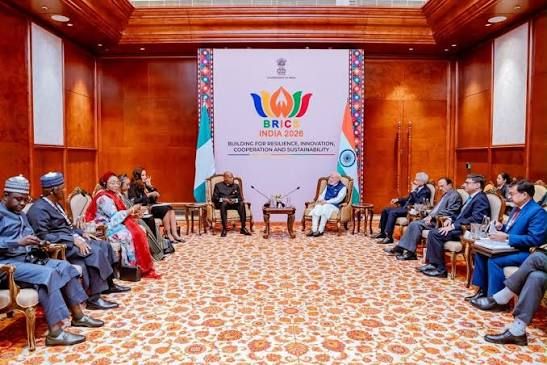
Away from the podium, External Affairs Minister S. Jaishankar used the sidelines for bilateral meetings with African counterparts: Ghana's FM Samuel Okudzeto Ablakwa, Lesotho's FM Lejone Mpotjoana, and Somalia's FM Abdisalam Ali. None produced an announced deal — readouts describe "bilateral ties" and "regional and global issues" in general terms — but they're the quieter, ongoing infrastructure of the relationship a vote count doesn't capture.
Why the alignment isn't an alliance
The G4 and the African Group have a genuinely complicated history here. Africa's Common Position has, at points, been wary of folding into the G4's package precisely because a six-seat compromise reshuffles the whole board — a deal built around seating India, Brazil, Germany and Japan isn't obviously the same as one built around Africa keeping veto power on its own two seats. Both camps argue for the same broad principle without having agreed on the same specific outcome.
The honest bottom line
Nothing was decided this week, and nothing was likely to be. Security Council reform has been formally on the UN's agenda since the 1990s, through years of "intergovernmental negotiations" that have produced discussion documents but no Charter amendment — which would require ratification by two-thirds of member states, including all five current permanent members, several of whom have no incentive to dilute their own veto. What UNGA 81 produced was rhetorical momentum and a push toward "text-based negotiations," not a resolution. For India-Africa watchers, the useful takeaway isn't that a deal is close — it's that both sides keep showing up in the same room making compatible-sounding arguments, whatever happens to the Council itself.
Note: quotes and bilateral meeting details reflect September 2026 reporting from UNGA 81's high-level week and MEA social-media readouts — treat specific meeting details as provisional until confirmed by official transcripts. UN Security Council reform has stalled for over two decades despite similar rhetoric at past sessions; nothing this year indicates the structural blockers have changed.