Why African Countries Are Banning Raw Mineral Exports — And What It Means for Investors
If you're investing in African mining or resource sectors, there's a policy shift you need to understand before you structure a deal: at least 13 African countries now restrict or ban the export of unprocessed minerals, requiring local processing first. This isn't a fringe policy — it includes major producers like Namibia, Botswana, Ghana, Nigeria, Tanzania, the DRC, and Zimbabwe.
What actually happened, and when
Zimbabwe banned raw lithium ore exports in December 2022. Nigeria followed in 2022 too, banning raw-ore export specifically to force local refining. Namibia followed in June 2023. In February 2026, Zimbabwe went further — suspending exports of all raw minerals, not just lithium, citing continued malpractice in mineral exports. This is a live, escalating trend, not a settled one.
It's not just talk — there's real investment behind it
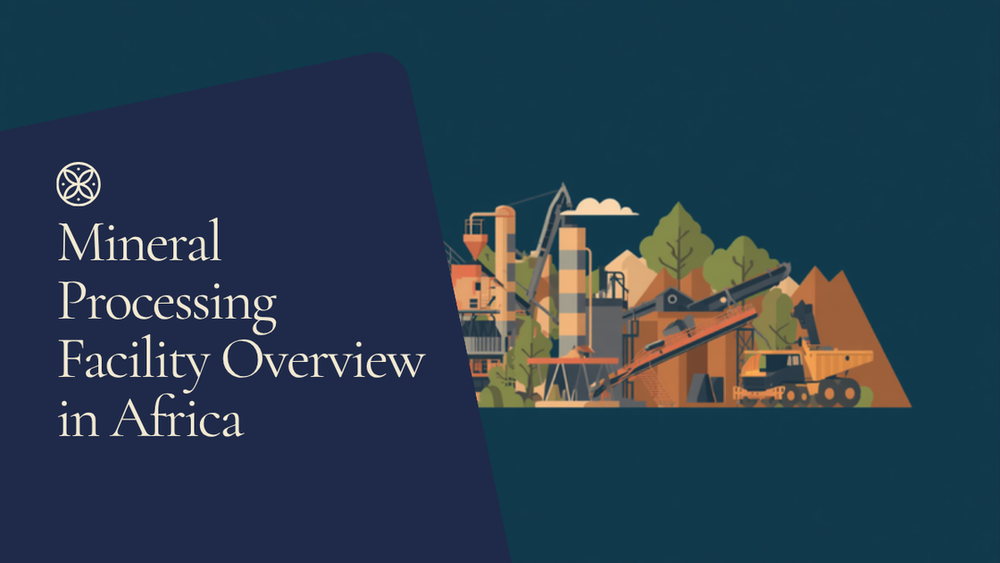
Nigeria's rule is already producing results: a lithium processing plant in Nasarawa State, commissioned this year, processes 6,000 tonnes of ore daily on roughly $250 million of investment — a real, working demonstration of the policy. Zimbabwe's lithium sector has attracted more than $1 billion in foreign investment, mostly from Chinese firms building both mines and processing plants, and lithium export earnings there surged from $70 million to over $200 million in a single year.
The honest counter-case
This isn't a guaranteed win for the countries imposing it. A study by the Natural Resources Governance Institute found Ghana could lose $500 million in revenue if it pursued domestic lithium processing — because building competitive processing capacity locally can be more expensive than exporting to established industrial hubs like China, given real constraints: unreliable electricity, water shortages, and limited local processing technology. Zimbabwe's own mining sector already consumes half the country's electricity — adding energy-intensive processing on top of that is a genuine infrastructure question, not just a policy decision.
What this means practically if you're structuring an investment
- Check whether your target country has a beneficiation requirement before you assume you can simply export raw material — this shapes your entire supply chain plan, not just a compliance checkbox.
- Case-by-case export exceptions sometimes exist (Zimbabwe allows applications for sample shipments, for example) — but approvals have been limited so far.
- Local processing partnerships are increasingly the more viable entry point than pure extraction-and-export models, given both the regulatory direction and the genuine economics in several markets.
Note: this is a live, fast-moving policy area — Zimbabwe's rules alone changed twice in recent years. Confirm current requirements for your specific country and mineral before relying on this for investment structuring.